820-00928 A1707 UB400 CD3215C Repair
Technical board-repair note: 15-inch MacBook Pro A1707 with repeat rebooting and no 20V USB-C negotiation. The fault was traced to a shorted UB400 CD3215C USB-C controller pulling down PP3V3_UPC_TB_LDO.
Fault Description
This 15-inch MacBook Pro A1707 with logic board 820-00928 came in with a USB-C power fault. It stayed at 5V and did not complete normal 20V negotiation.
Three USB-C ports showed a repeating current pattern, while one port stayed at a lower stable current. The stable port became the key clue because it did not behave like the other three ports during the power-up attempt.
Initial Symptom
The board was tested from all four USB-C ports. Three ports showed 5V / 0.25A and kept repeating, which looked like the board was trying to start and then resetting.
One port showed 5V / 0.16A stable. This port did not join the same start/reboot pattern as the other three, so it was treated as the suspicious port.
Measurements Table
| Test / Observation | Reading / Result |
|---|---|
| USB-C ports 1, 2, 3 | 5V / 0.25A, repeating reboot cycle |
| USB-C port 4 | 5V / 0.16A stable |
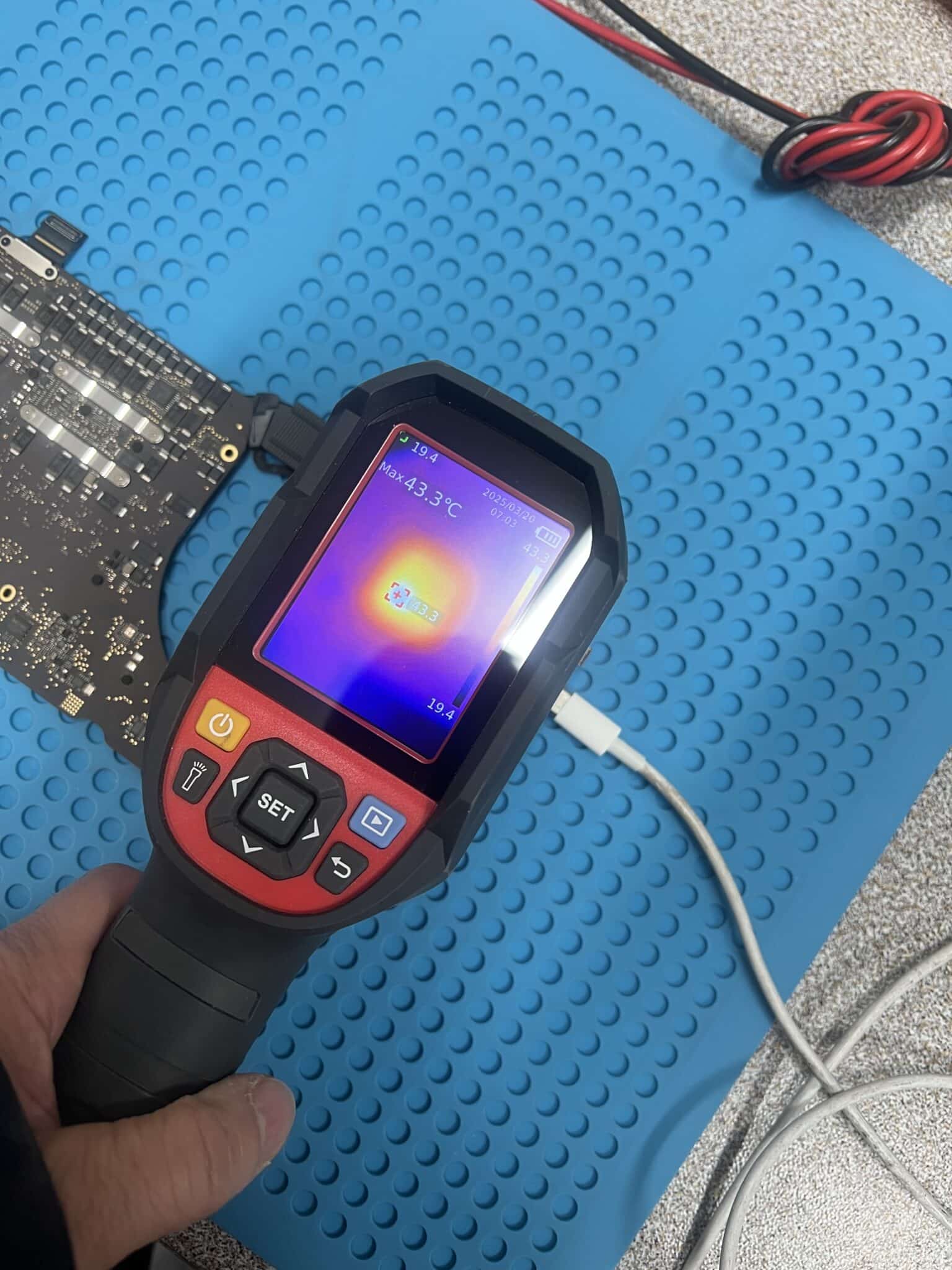
| Thermal camera | UB400 hot |
| PP3V3_UPC_TB_LDO before repair | 0.09 in diode mode, shorted |
| PP3V3_UPC_TB_LDO after UB400 replacement | 0.432 in diode mode, normal |
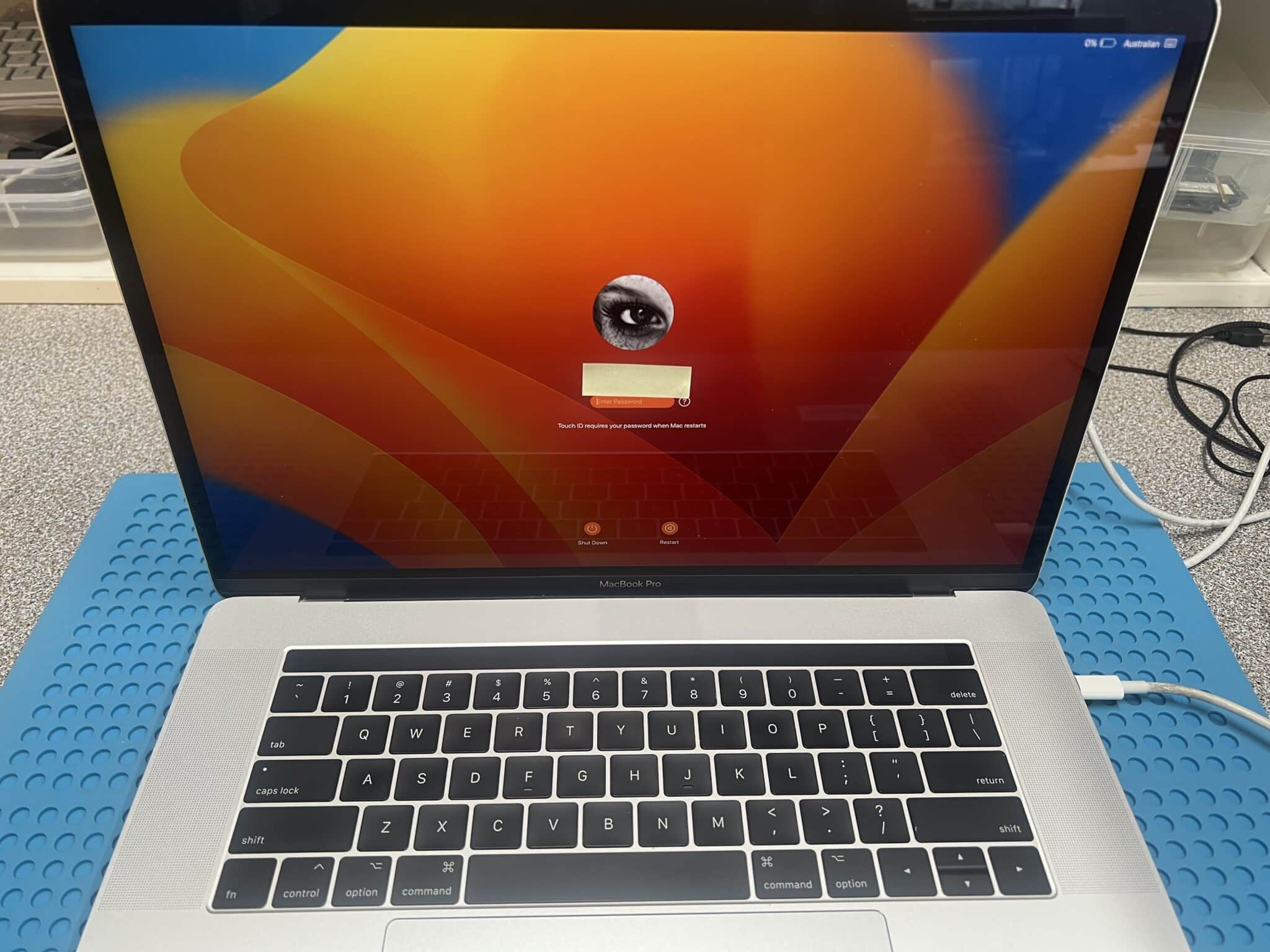
| Final power result | MacBook boots and works normally |
Why the Stable Port Was Suspicious
On this model, each USB-C port has its own CD3215/ACE controller. A good port should detect the charger, communicate through the CC lines, and participate in USB-C Power Delivery negotiation.
The three ports showing 5V / 0.25A repeating suggested the board was at least attempting a start cycle. The port stuck at 5V / 0.16A stable was different. It looked like that port controller was not entering the same negotiation/start behaviour, so the CD3215 circuit for that port became the first suspect.
The thermal camera then confirmed the direction: UB400 was hot. Diode mode on PP3V3_UPC_TB_LDO gave only 0.09, confirming a short or heavy leakage around that controller.
Circuit Logic
The A1707 USB-C system is not a simple DC input. Each USB-C port needs its CD3215 controller to wake, read CC1/CC2, identify cable orientation, communicate with the charger, and request the correct voltage.
The charger will stay at 5V until USB-C Power Delivery negotiation completes. If one CD3215 is shorted or its local LDO rail is pulled down, the affected port cannot negotiate correctly. It may also disturb the overall startup sequence, leaving the board stuck at 5V or causing repeat rebooting.
That is why all four ports should be verified before delivery. A MacBook can appear repaired from one port, but a failed controller on another port may still prevent reliable charging, USB-C detection, or 20V negotiation.

Repair Timeline
| Step | Result |
|---|---|
| 1. Tested all four USB-C ports | Three ports repeated at 5V / 0.25A. One port stayed at 5V / 0.16A. |
| 2. Identified suspicious port | The stable 5V / 0.16A port was different from the other three. |
| 3. Thermal camera check | UB400 was hot. |
| 4. Diode mode check | PP3V3_UPC_TB_LDO measured 0.09, confirming a short. |
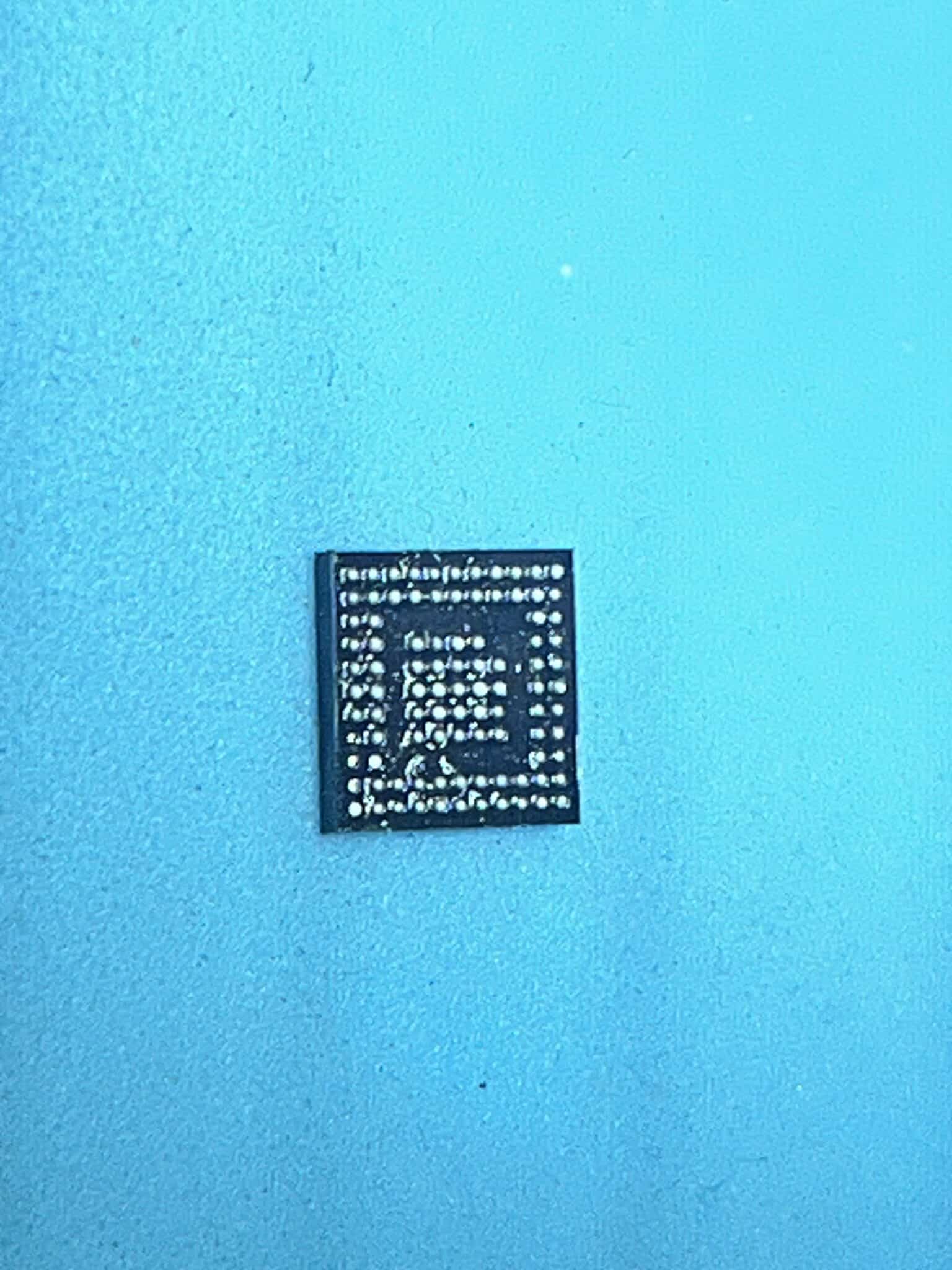
| 5. Removed and replaced UB400 | Faulty CD3215C replaced. |
| 6. Retested the rail | PP3V3_UPC_TB_LDO improved to 0.432. |
| 7. Final test | MacBook powered on and worked normally. |
Key Lesson
Key lesson: the stable low-current USB-C port is not always the good port.
In this case, the three repeating ports were showing that the board was trying to start. The one stable 5V / 0.16A port was the abnormal one. The final fault was UB400 CD3215C shorting PP3V3_UPC_TB_LDO.
Final Fix
The faulty UB400 CD3215C was removed and replaced. After replacement, PP3V3_UPC_TB_LDO returned from 0.09 to 0.432 in diode mode.
The MacBook then powered on normally and was fully functional. Before delivery, all four USB-C ports should be checked for normal charging behaviour and 20V negotiation.
Case Summary
| Device | MacBook Pro 15-inch |
|---|---|
| Model | A1707 |
| Logic board | 820-00928 |
| Main symptom | Repeat rebooting, stuck at 5V, no 20V USB-C negotiation |
| Suspicious port | The port reading 5V / 0.16A stable |
| Faulty chip | UB400 / CD3215C USB-C controller |
| Failed rail | PP3V3_UPC_TB_LDO shorted |
| Final repair | Removed and replaced UB400 |
| Result | MacBook powered on and worked normally |
This repair note belongs to our technical Mac logic board repair archive, where we record actual fault symptoms, voltage measurements and component-level fixes. View the full collection here:
Mac Logic Board Repair Case Studies
Need Board-Level Mac Repair?
MacBook USB-C and CD3215 Repair
We specialise in MacBook logic board repair, USB-C charging faults, CD3215 controller replacement, water damage repair and component-level diagnostics.