17-inch MacBook Pro 2010 820-2849 Repair: CPUVTT Collapse and Black Screen Fixed
Intro
This 17-inch MacBook Pro 2010 came to us as a very special repair. The customer loved this well-maintained machine, and because Apple no longer makes a 17-inch MacBook Pro, repair cost was not the main concern. The goal was simple: spend the time needed to bring this Mac back to full working condition.
The logic board was an 820-2849. The first fault was an intermittent power sequence failure. Most of the time, the board stayed at around 0.51A, with ALL_SYS_PWRGD = 0V and PPCPUVTT_S0 missing. Occasionally, the Mac would chime once and current would rise to around 1.26A, proving the board was capable of completing the power sequence under the right conditions.
This case eventually revealed two separate faults: a CPUVTT sense path problem that stopped the Mac from booting reliably, followed by a common GPU framebuffer power capacitor issue that caused black screen after chime.
Fault Description
The board was not completely dead. It entered part of the S0 power sequence but failed to complete it consistently.
Initial symptoms:
Board: 820-2849
Device: 17-inch MacBook Pro 2010
Current draw: mostly 0.51A stable
Occasional behaviour: chime once, current around 1.26A
ALL_SYS_PWRGD: 0V when failed
PPCPUVTT_S0: 0V when failed
PPVCORE_S0_GFX: 0V when failed
At first, the missing GPU core rail looked suspicious. However, the earlier missing rail was PPCPUVTT_S0, generated by the U7600 CPUVTT circuit. Without a stable CPUVTT rail, the system power-good chain could not complete, so the GPU rail issue was secondary at that stage.
Case Summary
Device: 17-inch MacBook Pro 2010
Logic board: 820-2849
Initial symptom: Intermittent boot / stuck around 0.51A
Missing rail: PPCPUVTT_S0
Failed part: R7641 high resistance, R7642 replaced as companion part
Secondary symptom: Chime but black screen
Second failed part: C9560 degraded capacitor on GPU framebuffer 1.8V rail
Final repair: R7641/R7642 + C9560 replacement
Outcome: Mac fully functional
Measurements Table
The CPUVTT enable and control signals appeared mostly normal:
CPUVTTS0_EN: about 2.8V
PM_SLP_S3_L_R: 3.3V
CPUVTTS0_VREF: about 1.7V
PPCPUVTT_S0: 0V
No short on PPCPUVTT_S0
The detailed schematic page showed that U7600 is SN0808088, not TPS51513. The simplified power architecture page was misleading, so the detailed CPUVTT regulator page was used for diagnosis.
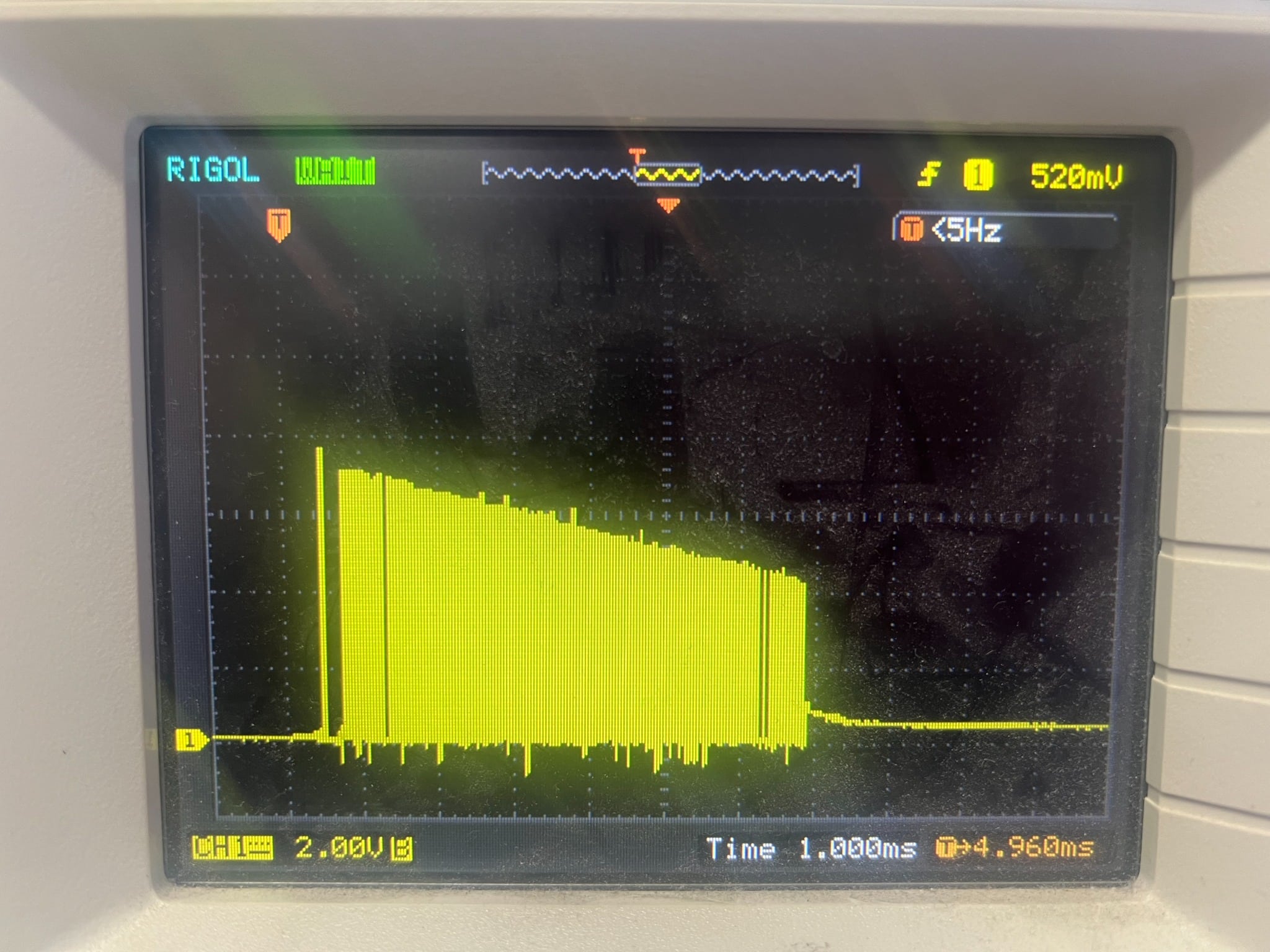
Scope measurements showed that the regulator was not completely dead. It was trying to start:
CPUVTTS0_DRVH: switching activity present
CPUVTTS0_DRVL: switching activity present
CPUVTTS0_LL: switching node activity present
CPUVTTS0_VBST: bootstrap activity present
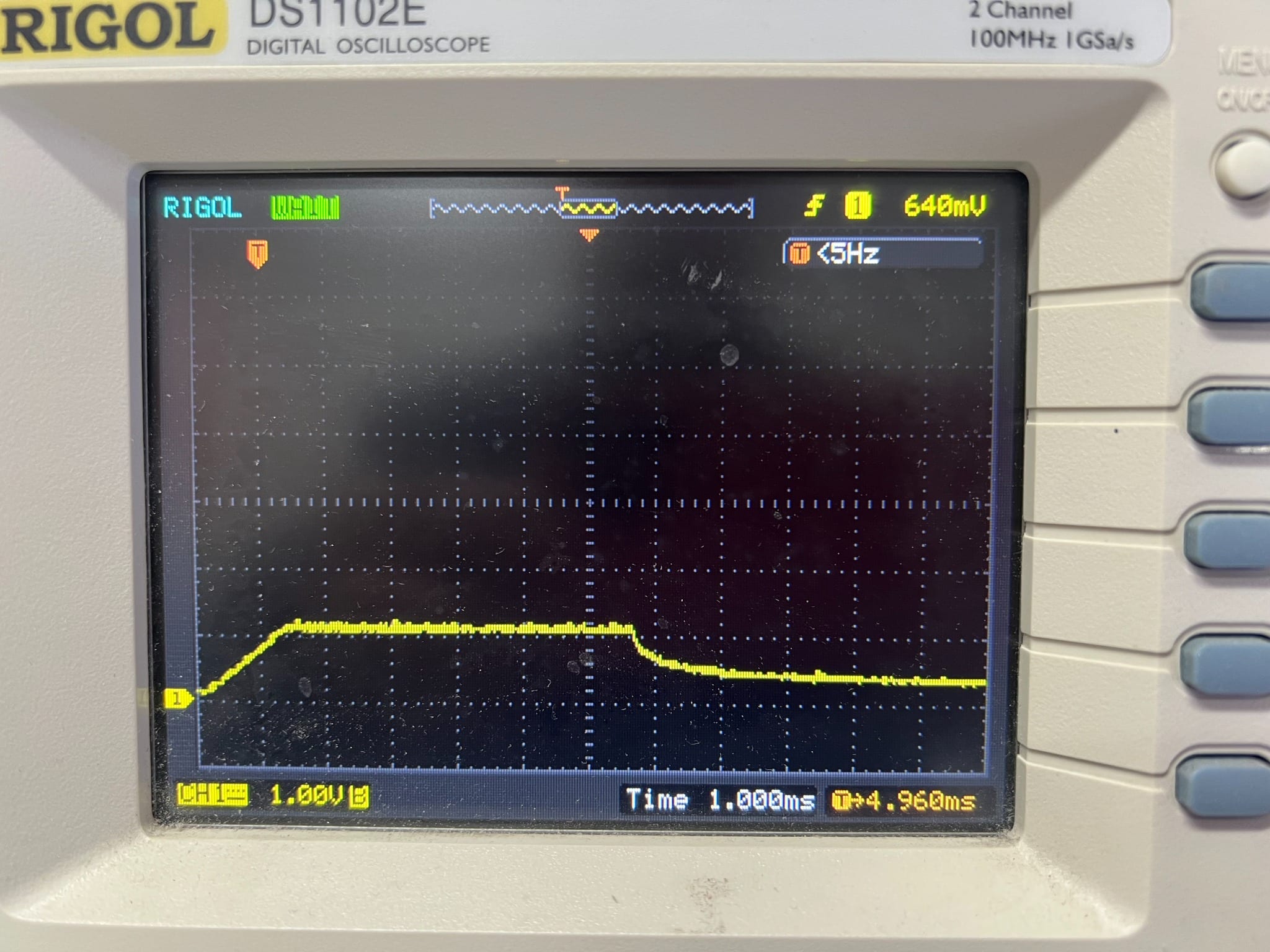
PPCPUVTT_S0_REG_R: rose briefly, then collapsed
This meant the controller was starting, driving the MOSFETs, and attempting to create the 1.05V CPUVTT rail, but something in the feedback or sense path was causing shutdown.


Circuit Logic
The CPUVTT 1.05V regulator sequence was:
PM_SLP_S3_L_R high
→ CPUVTTS0_EN high
→ U7600 internal reference active
→ VBST / DRVH / DRVL switching starts
→ CPUVTTS0_LL switch node drives L7630
→ R7640 current-sense/output path feeds PPCPUVTT_S0
→ R7641/R7642 sense links return correct information to U7600
→ CPUVTTS0_PGOOD should assert
→ ALL_SYS_PWRGD can complete
Because PPCPUVTT_S0_REG_R rose then collapsed, the load side was tested. R7640 was removed, and the regulator side was isolated with a capacitor used as temporary energy storage. Even with the CPU/load side removed, U7600 still started and collapsed.
This ruled out the CPU load side and pointed back to the local regulator sense path.

Repair Timeline
Step 1 — U7600 Area Investigation
U7600 was suspected because the rail started and collapsed. The chip was resoldered first. Later, replacement SN0808088 chips were installed, but the symptom did not change.
Step 2 — Bootstrap and Power Stage Checked
The bootstrap capacitor C7631 was replaced. The high-side and low-side MOSFETs Q7630 and Q7635 were also replaced. R7640 was replaced as well. The fault remained.
Step 3 — CPU Load Side Ruled Out
To prove the CPU was not dragging the rail down, R7640 was removed and the regulator side was tested with a capacitor load. U7600 still started and collapsed, so the CPU side was not the root cause.
Step 4 — Breakthrough: R7641 / R7642
The important clue came from checking the zero-ohm links near the sense path. R7641 was not 0Ω — it measured around 40Ω.
This small resistance was enough to corrupt the CPUVTT sense/feedback path. U7600 was switching, but it could not see the correct sense condition, so the regulator shut down.
Both R7641 and R7642 were replaced.
Result:
PPCPUVTT_S0 became stable
The Mac chimed every time
The intermittent 0.51A fault was gone
Second Fault: Chime but Black Screen
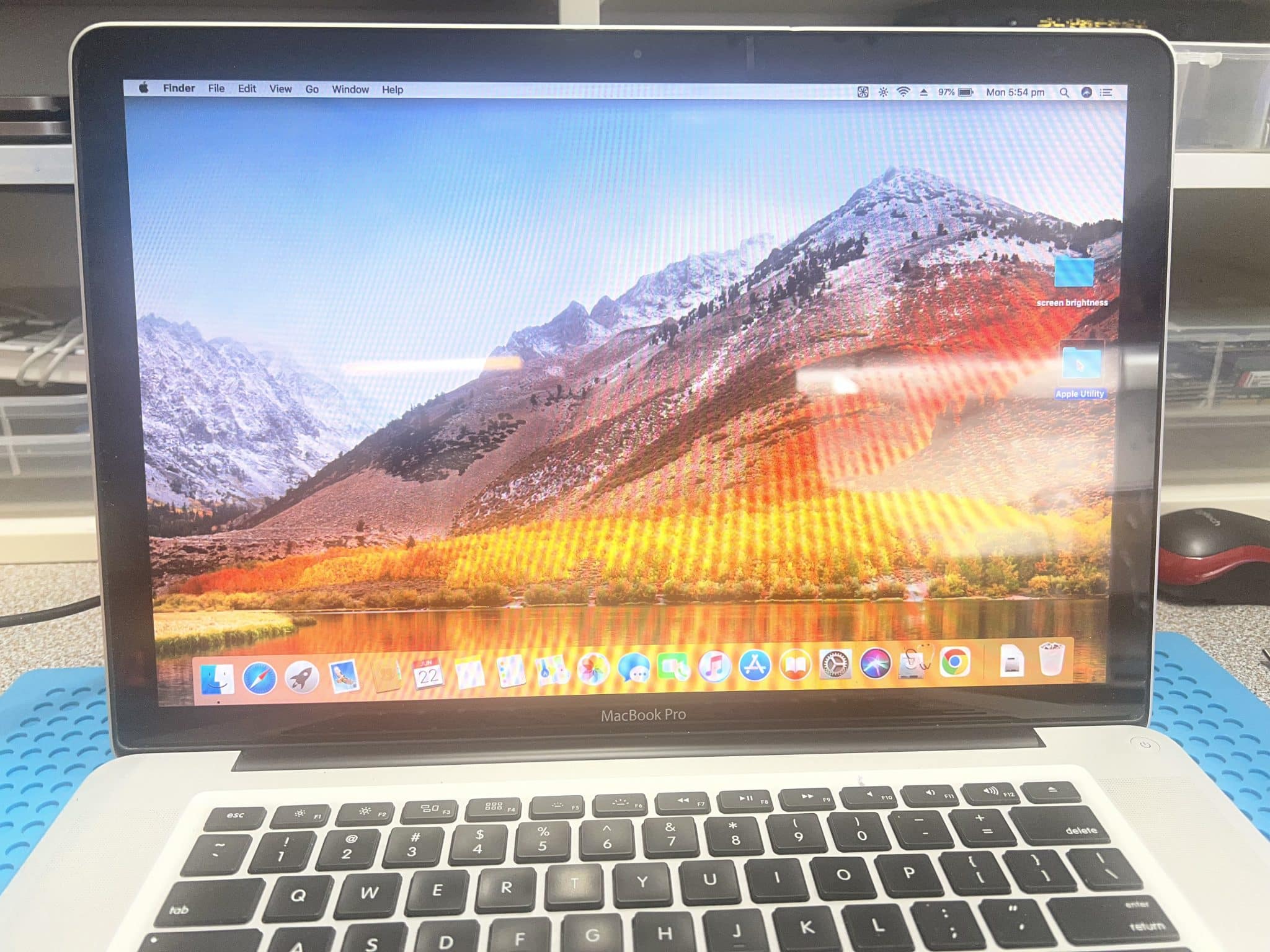
After the CPUVTT fault was fixed, the Mac chimed every time and Caps Lock responded, proving the system was booting. However, the internal screen remained black.
This model has a known display-related issue. As C9560 loses capacitance with age, the GPU framebuffer 1.8V rail becomes unstable. In this case, the affected rail was:
PP1V8_S0GPU_ISNS_RA weak C9560 can allow the Mac to boot while preventing the GPU/framebuffer display path from working correctly.
Final Fix
C9560 was replaced with a new polymer tantalum capacitor:
Replacement: 220µF or 330µF polymer tantalum capacitor
Rail affected: PP1V8_S0GPU_ISNS_R
Result: Display restored
After replacing C9560, the Mac displayed normally and became fully functional.
Key Lesson
This repair had two separate faults.
The first fault was not the CPU, not U7600, not the MOSFETs, and not the bootstrap capacitor. It was a high-resistance “0Ω” sense link. A small resistance in R7641 was enough to make the CPUVTT regulator start and collapse.
The second fault was a common 820-2849 GPU framebuffer power issue. Once the Mac could boot, the unstable PP1V8_S0GPU_ISNS_R rail caused black screen until C9560 was replaced.
If you are interested in the deeper diagnostic side of Mac repair, we have more real logic board fault cases documented here:
Mac Logic Board Repair Case Studies
Need Board-Level Mac Repair?
At IT-Tech Online, we repair Mac logic boards at component level. This includes old, rare, and customer-valued Macs that many repair shops would simply write off.
Related MacBook Repair Services